
Hi, I am loading the site

Lawing Tech

​

Skip to content
Lawing Tech

Technology watch

News

What matters in cybersecurity, cloud and telecoms, CCTV, software, artificial intelligence and public sector IT, with the essential tech news from Benin and the world. Every article is built on public sources, cited at its end.

Loading the news

Back to news

HID Professional Services deploys Crescendo cards to modernize physical access and prepare for FIDO2

HID Professional Services has led a global deployment of Crescendo cards to replace obsolete physical access systems, while paving the way for future integration with the FIDO2 standard. This transition, tested on industrial equipment, demonstrates a rigorous method for large enterprises.

by Lawing Tech Newsroom (3 min read)
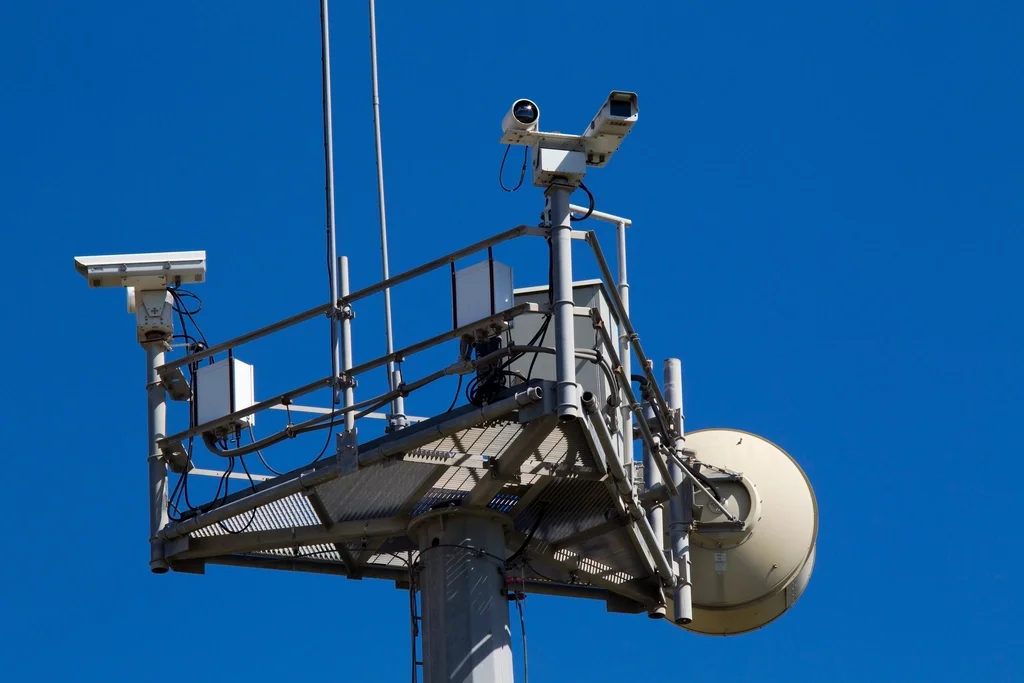
surveillance camera
Video: HID Professional Services Introduction (Thermo Fisher Scientific, YouTube)

Why Crescendo cards have replaced physical badges in hundreds of companies

HID Professional Services has orchestrated a global deployment of HID Crescendo Cards, designed to succeed obsolete physical access systems like Prox or Seos badges. According to HID Global, these cards support both technologies (Prox and Seos), offering backward compatibility while opening the door to future migration toward more secure protocols like FIDO2, standardized by the FIDO Alliance. This approach allows organizations to avoid a complete replacement of their readers while preparing their infrastructure for passwordless authentication methods.

A successful deployment relies on real-world testing and seamless coordination between technical teams, manufacturing, and logistics.

caméra de vidéosurveillance
Illustrative photo: surveillance camera (WrS.tm.pl, CC0)

The logistical and technical challenges of large-scale deployment

The success of such a project depends on several technical and organizational pillars. First, validating identity data before card personalization: inconsistencies in the databases used can delay production and distribution, as HID Professional Services notes. Next, real-world testing is essential, particularly on industrial equipment such as forklifts, locker systems, or cafeteria terminals, where readers must operate flawlessly. Finally, coordination between technical teams, manufacturing services, logistics, and stakeholders is presented as a critical element to minimize operational disruptions.

What this means here: securing physical access in Benin and West Africa without overhauling the entire system

For businesses and government agencies in Benin or West Africa still using access badges based on technologies like Prox or Seos, this global deployment offers a locally applicable model. By adopting cards like the Crescendo Cards, they could modernize their systems gradually, without immediately investing in FIDO2 infrastructure while maintaining compatibility with existing systems. This would reduce migration costs and allow testing of more secure solutions (such as Elite Key fobs or biometric authentication) before a full transition. In the long term, this approach would also facilitate the integration of emerging regional standards aligned with international benchmarks like FIDO2.

The migration to FIDO2: preparing for passwordless authentication

One of the major strengths of Crescendo Cards lies in their ability to evolve toward protocols like FIDO2, which eliminate passwords in favor of authentication based on physical keys (such as the Elite Key) or biometrics. According to HID Professional Services, this transition should be anticipated from the design phase of deployment, as it involves changes in network infrastructure and security policies. For Beninese or West African organizations, this would mean reducing risks related to password leaks while simplifying access for employees, a critical issue in a context where cyberattacks increasingly target identification systems.

Sources

  1. Converged Credential Deployment: 4 Lessons from a Global Enterprise RolloutHID Global, 12 October 2026

Prepared by Lawing Tech's technology watch from the sources cited. Our editorial charter

Latest articles

  1. Airtel Gabon and ZTE Launch Africa Central’s First Massive MIMO FDD+TDD Antenna
  2. Axis Communications Unveils AXIS OS 13: Enhanced Cybersecurity and Network Device Integration
  3. The FGI-AC 2026 in N’Djamena: Digital Sovereignty and Innovation in Central Africa
  4. UTA0576 exploits three zero-day vulnerabilities in Ivanti Connect Secure: root access and credential theft underway
  5. Amazon Bedrock and AWS Launch AI Agents Capable of Automatically Paying for Protected Web Resources
  6. BCEAO and AfDB Join Forces to Boost Development Financing in West Africa
  7. Ledger Discovers Fraudulent Hardware Implant in Wallets Sold by CryptoBilis: $86 Million in Crypto Stolen
  8. Amazon Bedrock expands access to GPT-6 models Sol, Luna, and Astra in Southeast Asia and Taiwan via cross-region inference
  9. Cloud Temple Launches a European Consortium for a Sovereign and Secure Cloud with Thales, Bull, and CEA
  10. Malware incident at Nippon Columbia: 8.6 million customer records exposed without affecting Daiichi Kosho systems
  11. OrcaRouter Launches OrcaCyber Zero 1.5: A Cybersecurity-Dedicated Model with a 1-Million-Token Context Window
  12. ABLOY expands its CUMULUS solution to cylinders for mobile key-free access, enhancing security and flexible management
  13. California Launches Unified Dashboard for Behavioral Health Thanks to Databricks
  14. Benin Launches Its AI and Cybersecurity Strategy: The 2026 CDSI Sets the Foundations for a Local Digital Ecosystem
  15. Hitachi Energy Warns of Two Critical Vulnerabilities in REB500: Risks of Denial of Service and Memory Corruption
  16. AWS Aligns Clients with ISO/IEC 42005:2025 Standard for Responsible AI Governance
  17. ServiceNow Unveils Two AI Solutions to Continuously Automate and Optimize Business Workflows
  18. Google Cloud Modernize: A Turnkey Portfolio to Modernize Infrastructure with AI
  19. IDEMIA Validates Its WebCapture SDK: Zero Failures in 900 Deepfake and Biometric Fraud Attacks
  20. The BCEAO Makes PI-SPI Mandatory and Revolutionizes Instant Payment Fees in the UEMOA
  21. Burkina Faso Overtakes Niger at the Port Autonome de Cotonou: A Shifting Commercial Dynamic
  22. Fortinet Reveals Critical Flaw CVE-2026-104286 Actively Exploited in FortiMail: How to Respond
  23. Amazon S3 Vectors becomes the persistent memory for AI agents with NVIDIA NeMo Agent Toolkit
  24. GitHub Copilot expands capabilities with computer use: automating desktop applications under conditions
  25. Cloudflare Unveils Workers KV Instant: Global Instant Updates and 100 Times Faster Reads
  26. IQSIGHT Earns LenelS2 Certification for Enhanced Video and Analytics Integration with OnGuard 8.3
  27. West African Investment Bank Injects 390 Million USD: Energy, Mining, and Infrastructure at the Heart of Funding
  28. Massive Data Breach in France: How Vulnerabilities Enabled a Seven-Week Hack
  29. RSA Agent ID: A Platform to Master the Risks of AI Agents in Regulated Sectors
  30. Phishing Campaigns in 2026: How Cybercriminals Exploit Legitimate Remote Management Tools
  31. Google Research Launches Diffusion Controller to Simplify AI Image Generation
  32. AT&T and Corning Invest 3 Billion Dollars in Fiber Optics to Meet Exploding Data Demand
  33. Databricks Unity Catalog: Data Sovereignty and Mastered Cloud Storage
  34. Calix and Astound Successfully Validate 50G-PON Deployment in the United States
  35. GitHub Integrates External Properties to Link Business Context and Code Repositories
  36. Cyber vulnerabilities and interoperability become major issues in access control systems
  37. Comcast deploys fiber-based detection technology to strengthen network resilience
  38. Condé Nast cuts video search time from 250 minutes to 2 minutes thanks to multimodal AI
  39. PhantomSub Campaign: 101 npm Packages Hijack Developers' WhatsApp Accounts Without Consent
  40. Star Blizzard shifts to large-scale phishing campaigns using RedFlick and CosmicPulse techniques

All the news