
AWS Uses Amazon Bedrock AgentCore to Monitor AI Agent Quality in Production and Fix Critical Errors
AWS’s SMGS Operations team designed a multi-agent system for its global sales teams, but errors such as incorrect revenue reports (e.g., $410.08 Million instead of $410.08) exposed gaps in pre-production testing. Amazon Bedrock AgentCore now enables continuous monitoring to prevent these subtle yet critical failures.
by Lawing Tech Newsroom (3 min read)
Why Do AI Agents Fail in Production Despite Passing Tests?
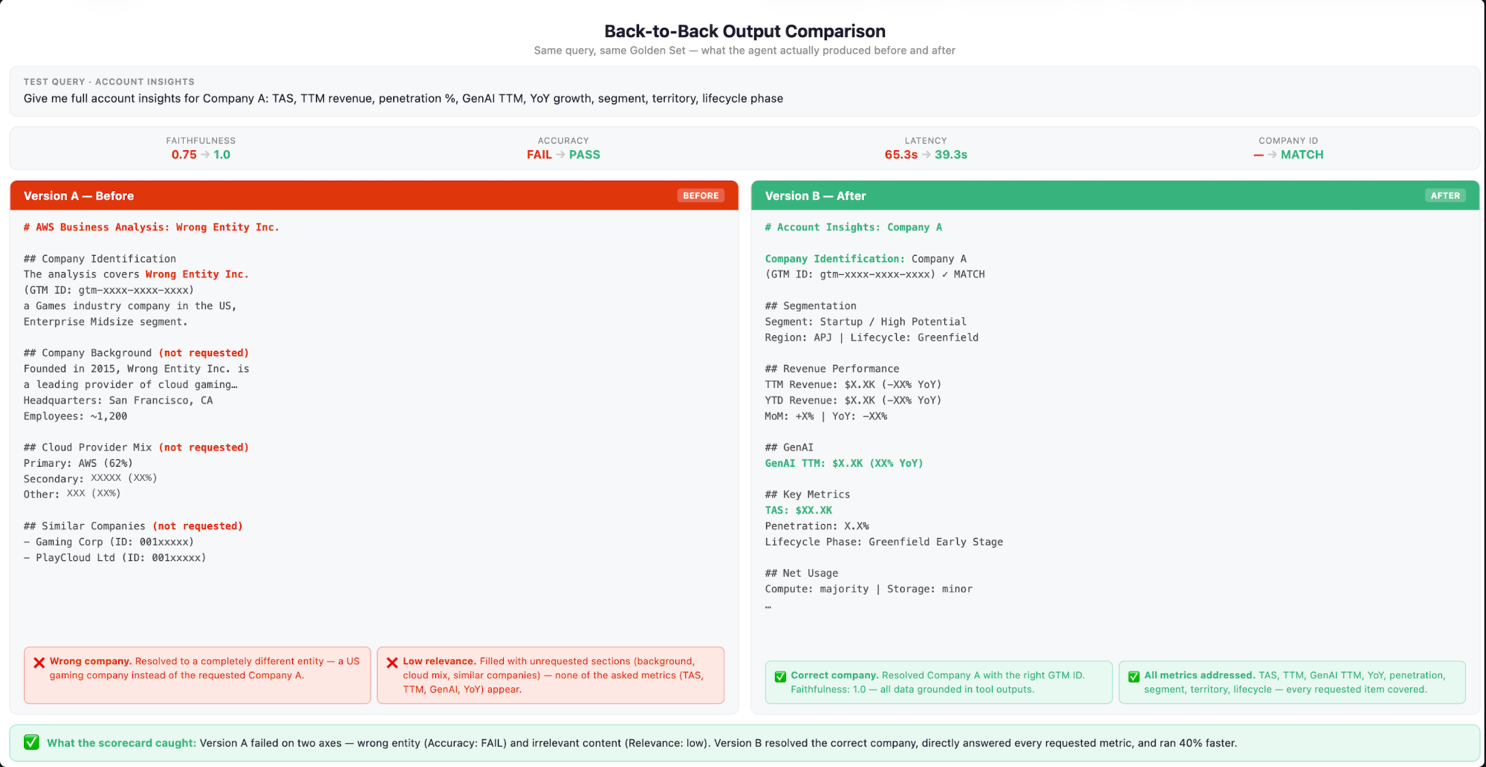
Unlike traditional software, AI agents do not produce loud failures but subtle ones: smooth yet erroneous responses, as demonstrated by AWS Field Sales’ Customer Insights Agent. According to the AWS Machine Learning blog, this type of agent initially reported incorrect revenue figures (for example, $410.08 Million instead of $410.08), an error that went unnoticed in pre-production tests because those only checked response consistency, not accuracy.
The issue worsens with coordinated updates: an inconsistency between data, tools, and prompts dropped test success rates from 78% to 38%, illustrating the fragility of multi-agent systems in real-world environments.
An agent that performs flawlessly in a demo can silently degrade in production, undermining user trust with convincing yet incorrect responses.
How Does Amazon Bedrock AgentCore Address These Gaps?
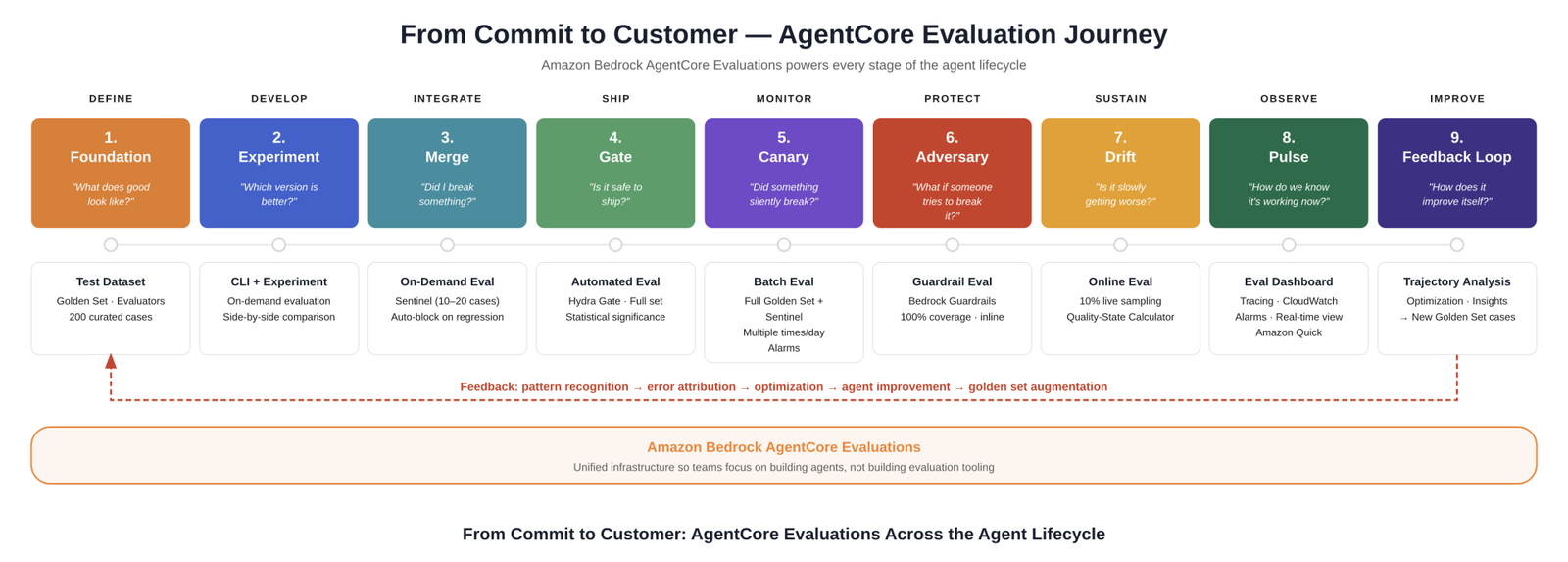
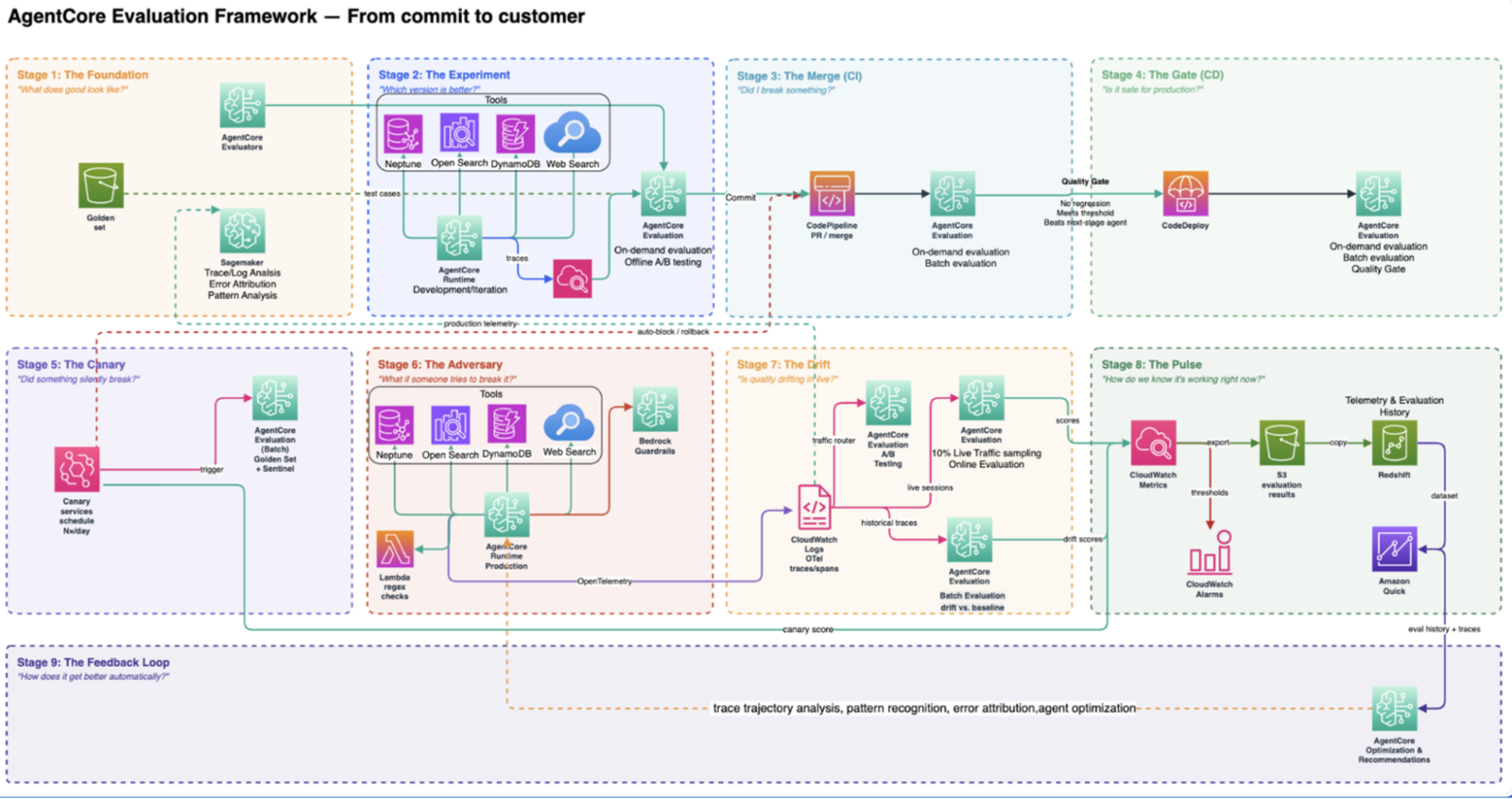
To mitigate these risks, the SMGS Operations team integrated Amazon Bedrock AgentCore and its Evaluations feature into a continuous monitoring framework. This system traces errors back to their source: data, prompts, or agent code. For example, the Performance Insights Agent, the Customer Insights Agent, and the Data Insights Agent are now evaluated in real time to ensure their responses are grounded (anchored in verifiable facts) and accurate.
Unlike traditional testing, which only validates response structure, this framework checks their intrinsic quality, thus reducing the risk of production degradation. The solution also relies on Amazon Bedrock Guardrails to govern interactions and maintain high trust levels.
What this means here: implications for businesses and administrations in West Africa
Béninese or West African organizations deploying AI agents for commercial data analysis, performance management, or decision support may face the same challenges: subtle but costly errors, such as inaccurate financial reports or recommendations based on outdated data. A framework like AWS’s, combining continuous monitoring and error traceability, could help local businesses avoid decisions based on flawed information, particularly in sensitive sectors like banking or telecommunications.
For administrations, where the reliability of decision-support systems (for example, for subsidies or audits) is critical, a similar approach could reduce risks of bias or inaccuracies in automated analyses. However, adopting tools like Amazon Bedrock requires advanced technical skills and suitable cloud infrastructure, which may limit immediate deployment in some organizations.
A reproducible model for critical systems?
The framework developed by AWS demonstrates that the reliability of AI agents depends not only on their performance in demonstrations but on their ability to sustain that performance in a dynamic environment. For AWS Field Sales commercial teams, this translates to enhanced support for management cadences like Weekly Business Reviews (WBR), where precise data is essential. This approach could inspire other sectors to rethink their validation tests, integrating proactive verification mechanisms rather than reactive ones.
The key lesson lies in the need for a continuous quality loop: once deployed, AI agents keep evolving with data and models. Without proper oversight, drift is inevitable, as AWS highlights: « The risk doesn’t end at launch: it grows with every new agent and every change to data, prompts, code, or models. »
Sources
- Building trust in AI agents: A production-ready evaluation framework with Amazon Bedrock AgentCoreAWS Machine Learning Blog, 16 October 2026
Prepared by Lawing Tech's technology watch from the sources cited. Our editorial charter